


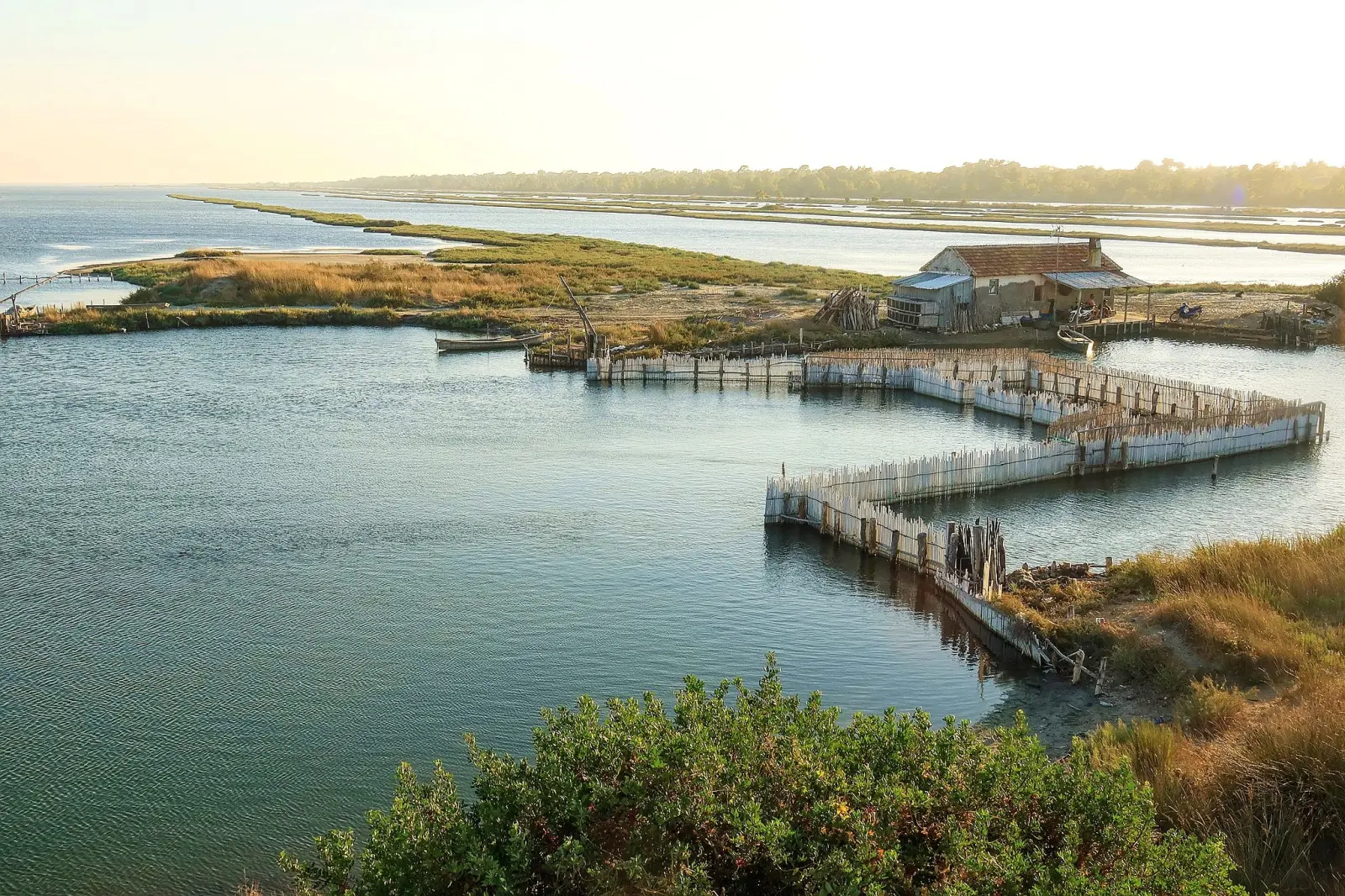

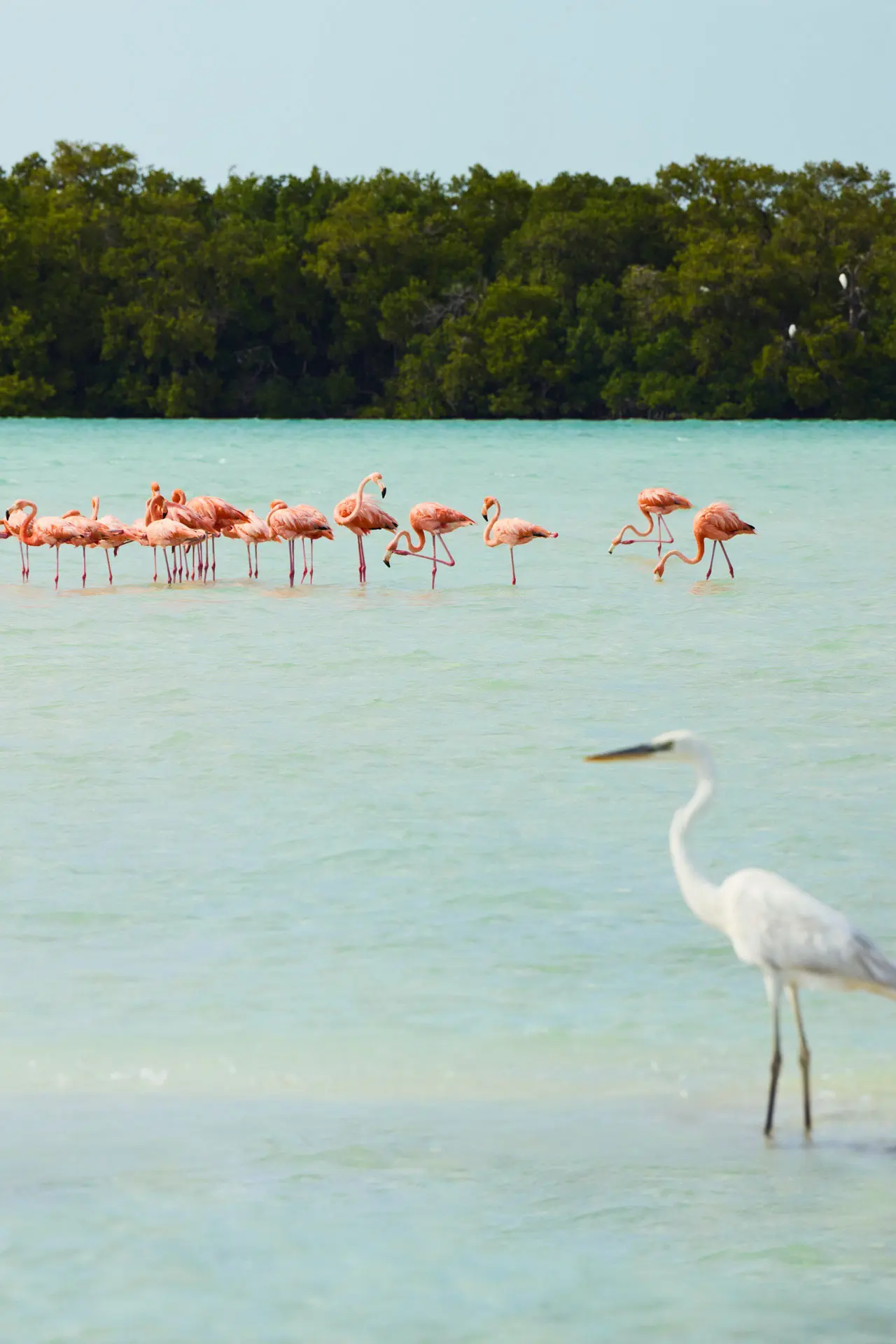
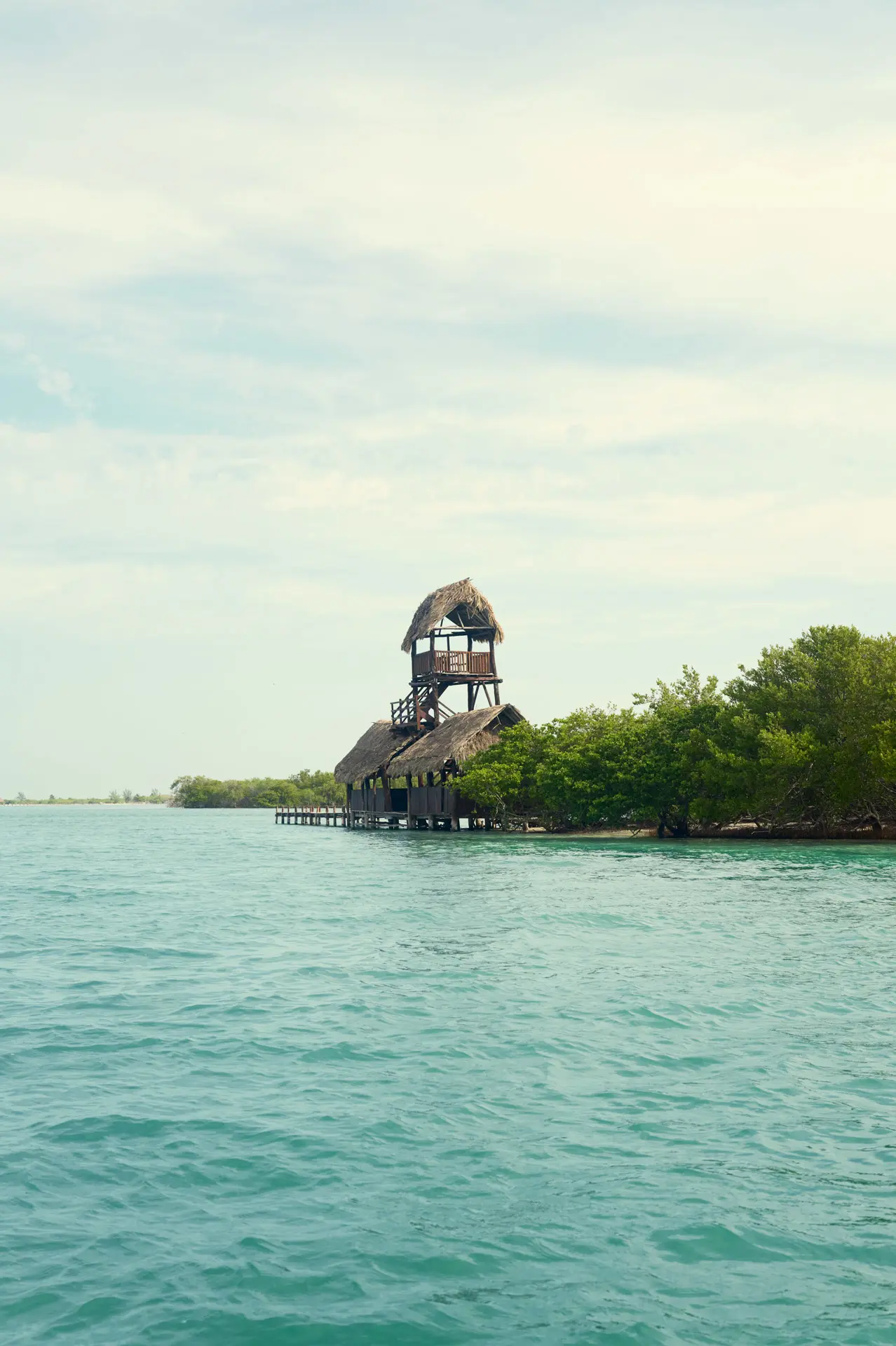
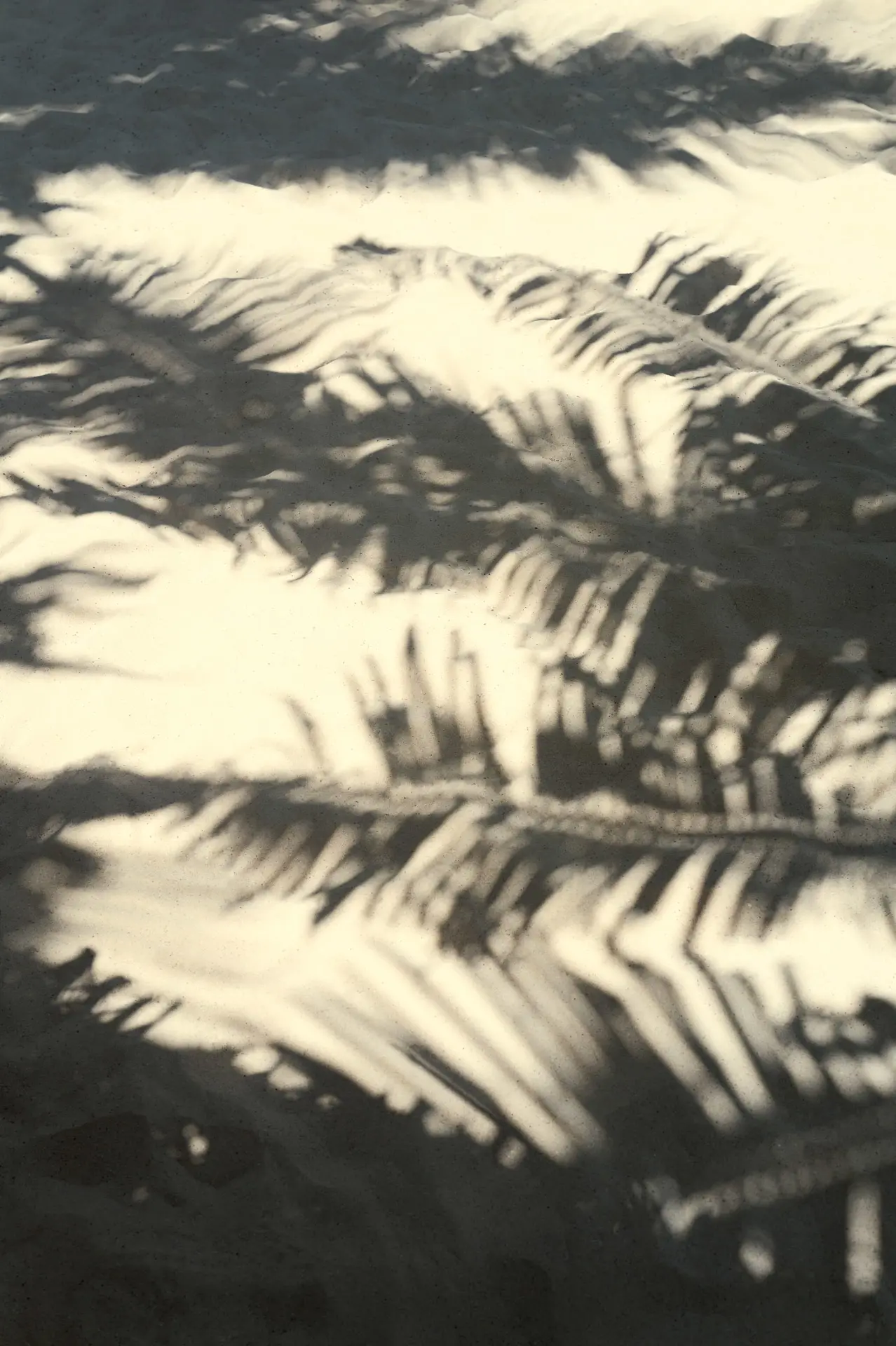
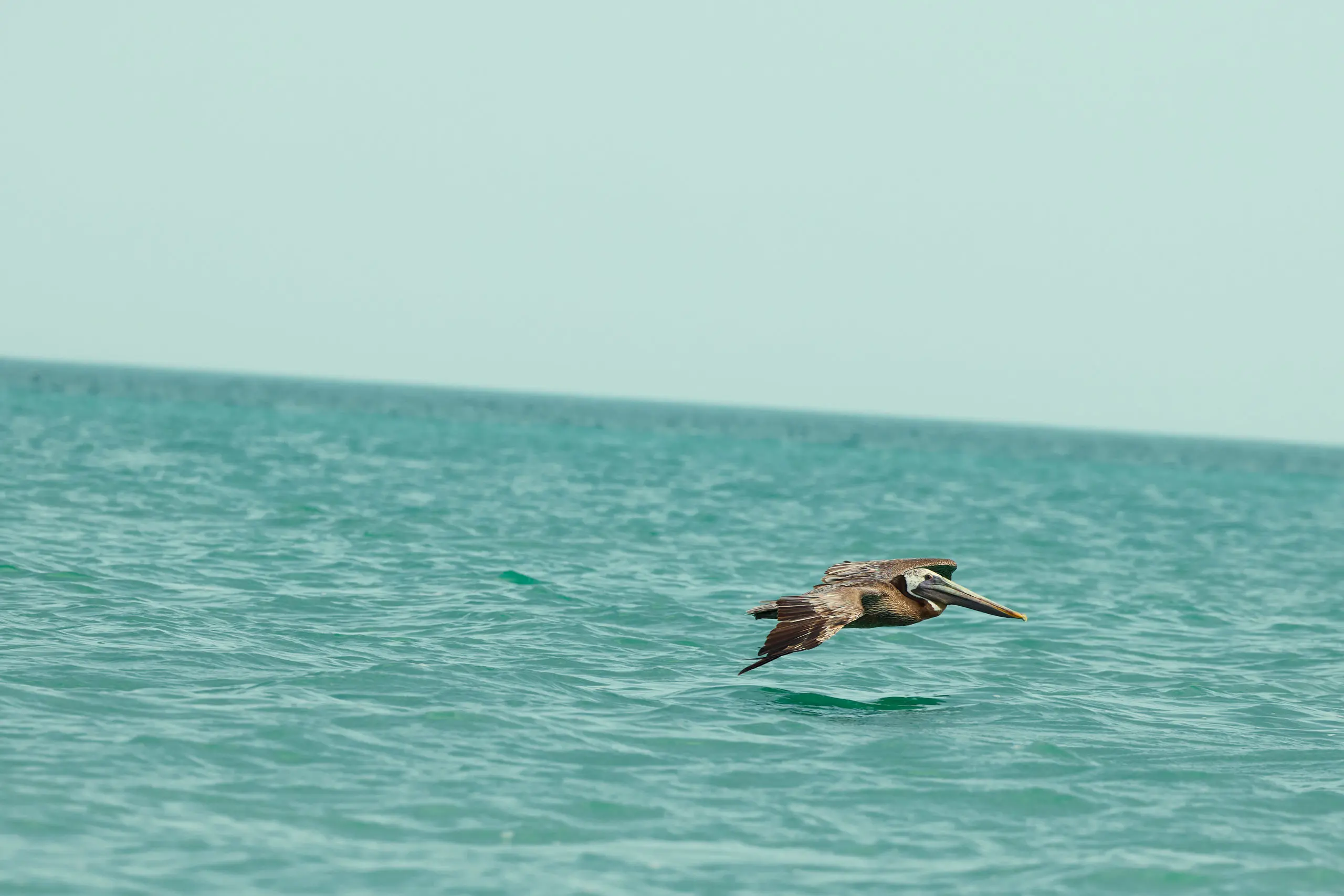


Dotted along the shores of the island, palm-thatched roofs, sun-bleached and wind-worn stilts resting lightly in turquoise shallows. These palapas accent the landscape with an almost mythical feel, and their story stretches far beyond this small Yucatán Isle.
The word palapa (Spanish, with Tagalog roots) means “petiole of the palm leaf,” and describes an open-sided structure crowned with dried palm fronds. Perfectly suited to hot, tropical climates, it has become a fixture of Mexican beaches and deserts. But its origins trace to the bahay kubo, or “nipa hut,” of the Philippines - a design carried across the Pacific during the era of Nueva España.
On Holbox, the palapa has evolved into something emblematic. Beneath its shade, travellers sip chilled mezcal and watch the tide turn to gold, lulled by the hush of the mangroves. There’s no marble, no glass - only palm leaves rustling in rhythm with the sea.